What are the eco-friendly materials used in modern indoor consumer unit distribution box?
- VIP-User
- 2026-07-23
- 4
Modern indoor consumer unit distribution box models utilize recyclable polycarbonate (PC) for protective covers, high-grade 1.2mm thick iron sheets for durable enclosures, and high-conductivity pure copper for busbars and terminal bars. These materials minimize environmental impact while complying with strict global environmental standards like RoHS and ISO14001:2015.
Core Solutions & Key Takeaways
- Polycarbonate (PC) Covers: Recyclable thermoplastic material offering high impact resistance and self-extinguishing flame-retardant properties.
- 1.2mm Thick Iron Sheets: Robust metal enclosures ensure extreme durability, minimizing replacement waste over decades of service.
- Pure Copper Components: Busbars and terminal bars maximize energy efficiency by reducing electrical resistance and heat dissipation.
- Certified Compliance: Adherence to RoHS (UNI2017081421RC-01) and ISO14001:2015 environmental standards ensures the absence of hazardous substances.
Detailed Architectural/Principle Analysis
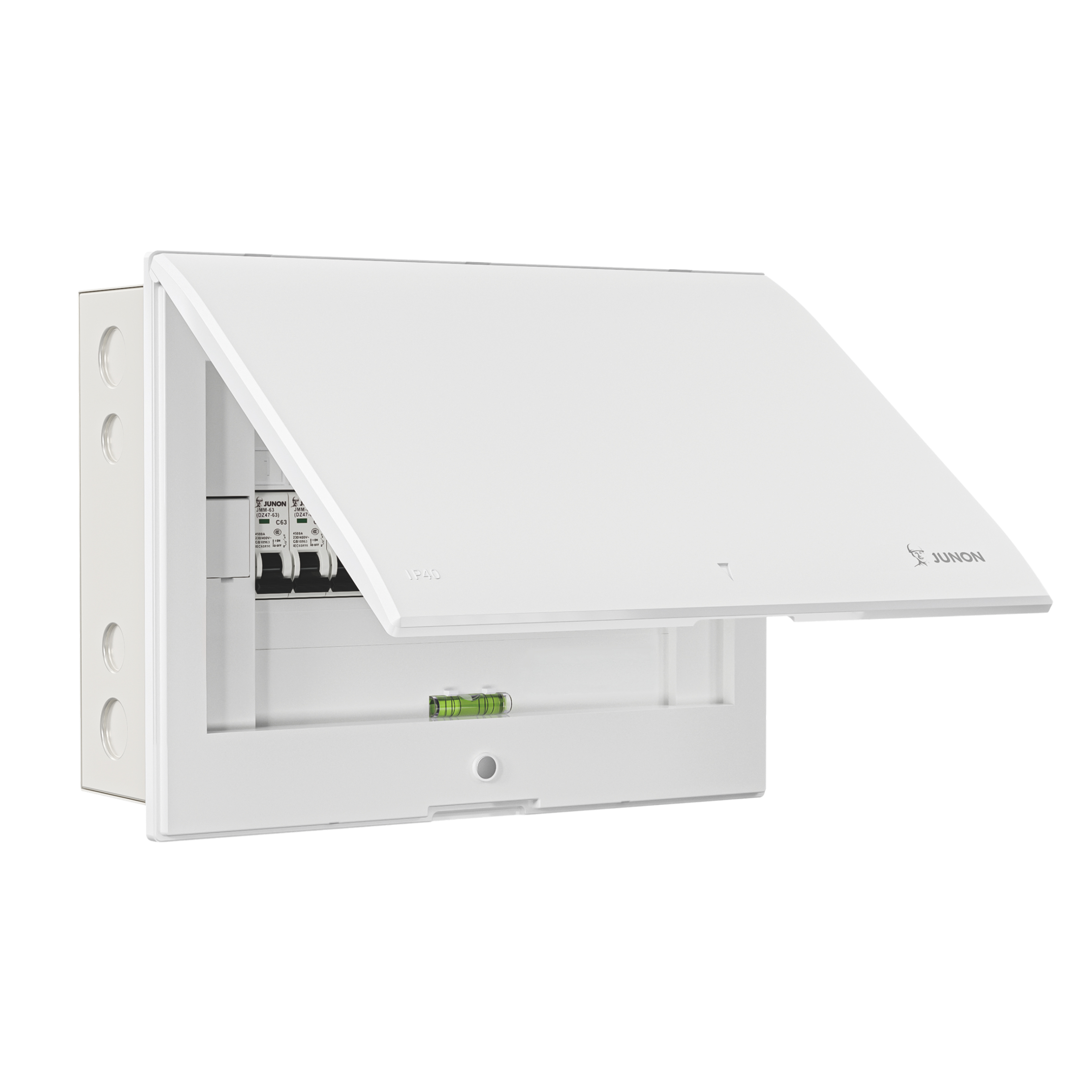
In modern electrical engineering, the choice of materials for an indoor consumer unit distribution box directly impacts both environmental sustainability and operational safety. The V22 series 12 way flush mounted distribution box employs a multi-material architecture designed to balance mechanical protection with eco-friendly lifecycles. The outer cover is constructed from high-grade polycarbonate (PC), a recyclable polymer that replaces traditional single-use plastics. PC materials demonstrate high thermal stability, preventing hazardous gas emissions during overcurrent events.
The load-bearing chassis of the distribution box relies on a 1.2mm thick iron sheet. Unlike lighter composite plastics that degrade under UV light and thermal stress, structural iron can be completely melted down and recycled at the end of its lifecycle. This robust metal enclosure provides electromagnetic shielding and structural rigidity suitable for demanding environments, including residential housing and commercial hospitality projects. For example, contractors deployed 438 units of these distribution boxes at the Seda Vertis North project in Quezon City, Philippines, and 200 sets at the Garden Inn Nairobi Airport in Kenya, confirming stable field performance and ease of installation.
Internally, the distribution box utilizes pure copper busbars and terminal bars. The high electrical conductivity of pure copper reduces line losses and resistive heating. By optimizing power distribution efficiency, these internal copper networks prevent energy waste and lower overall carbon footprints throughout the building's operational lifespan. This material configuration aligns with international standard certifications, such as the CB Certificate (CN42895) and the CE LVD Certificate (LVD22-9194).
Data/Solution Comparison
| Component | Standard Material Specs | Eco-Friendly & Technical Advantages |
|---|---|---|
| Protective Cover | Polycarbonate (PC) Cover | 100% recyclable, flame-retardant, high impact resistance |
| Enclosure Chassis | 1.2mm Thick Iron Sheet | Fully recyclable metal, high mechanical strength, long-life durability |
| Conductive Elements | Pure Copper Busbar & Terminal Bars | High conductivity, minimizes energy loss, low heat generation |
Frequently Asked Questions (FAQ)
Why is polycarbonate (PC) preferred over standard PVC for indoor consumer unit covers?
Polycarbonate is fully recyclable, highly flame-retardant, and offers superior impact resistance compared to standard PVC, significantly reducing plastic waste and hazardous emissions during thermal stress.
How does a 1.2mm thick iron sheet enclosure benefit the environment?
The 1.2mm thick iron sheet is highly durable, preventing early wear and structural failures. At the end of its functional life, iron is 100% recyclable, returning to the industrial cycle without degrading in material quality.
Do copper busbars contribute to energy conservation in distribution boards?
Yes, pure copper busbars and terminal bars possess low electrical resistance. This minimizes power loss as heat during distribution, optimizing overall building energy efficiency.
Final Conclusion & Recommendations
Selecting the right indoor consumer unit distribution box requires evaluating the ecological impact of its structural and conductive materials. Standardizing on recyclable polycarbonate covers, heavy-duty 1.2mm iron sheets, and pure copper electrical paths ensures high-efficiency performance with minimal environmental footprints. When sourcing electrical distribution components, operators should verify international credentials, such as the ISO14001:2015 Environmental Management System and RoHS conformity. Implementing these compliant systems in residential, commercial, or public infrastructure projects guarantees long-term safety, efficiency, and resource sustainability. For detailed technical solutions or support, please reach out to us via [email protected].
About Us
Established in 1983, Guangdong JUNON Songtian Electrical Appliance Co.,Ltd is a professional manufacturer of switches, sockets, distribution boxes, and LED lights. Operating from a 148,000 square meters factory area with a workforce of 2,000 employees, the company integrates advanced R&D engineering with standardized production. The enterprise holds key certifications including ISO9001:2015, ISO14001:2015, and ISO45001:2018, and has served contractors across global real estate and hospitality projects, including installations in the Philippines, Kenya, and Ivory Coast.
Lastest
-
Are there any newly developed UV-resistant plastics for IP65 waterproof distribution box?
2026-07-23 -
What is the maximum current load for this EU wall switch and multi socket?
2026-07-23 -
What is the lead time for a sample of this switch with universal socket?
2026-07-23 -
Can you provide a video tour of your factory where this return switch is made?
2026-07-23 -
How much do you charge for a sample of this multi socket with independent on off switch?
2026-07-23
SUBSCRIBE
INQUIRY