What standard back box depth is required for a UK light switch?
- VIP-User
- 2026-09-01
- 3
A standard UK light switch typically requires a back box depth of 16mm for standard plate switches, while 25mm is recommended for modern flush or flat-plate designs. Deep units, smart switches, or dimmer switches with larger internal modules require 35mm to 47mm depths to accommodate wiring and ensure compliance with British Standards (BS).
Core Solutions & Key Takeaways
- Standard Plate Switches: 16mm back box depth provides adequate clearance for traditional surface-mounted or standard profile light switches.
- Modern & Decorative Plates: Glass surface and flat-plate designs, such as the WJ series glass surface 13A BS socket with switch and neon, require a minimum depth of 25mm to 35mm for flush wall fitting and rear terminal clearance.
- Dimmer & Smart Controls: Electronic dimmers, smart switch modules, and high-current connection units demand 35mm or 47mm back boxes to allow proper thermal dispersion and avoid cable pinch points.
- Application Scenarios: Applicable across Residential & Domestic Applications as well as Commercial & Hospitality Applications adhering to BS 1363 and related installation standards.
Detailed Architectural/Principle Analysis
Selecting the correct back box depth for a UK light switch depends on the switch's mechanical depth, terminal block projection, and total conductor volume inside the enclosure. Standard shallow boxes measuring 16mm accommodate simple single-pole or multi-gang switches with thin front plates. However, modern interior architectural designs favor screwless, metal, or glass surface switch plates. These decorative ranges position the working mechanism further back into the wall cavity, necessitating a 25mm or 35mm back box depth to keep electrical wiring stress-free.
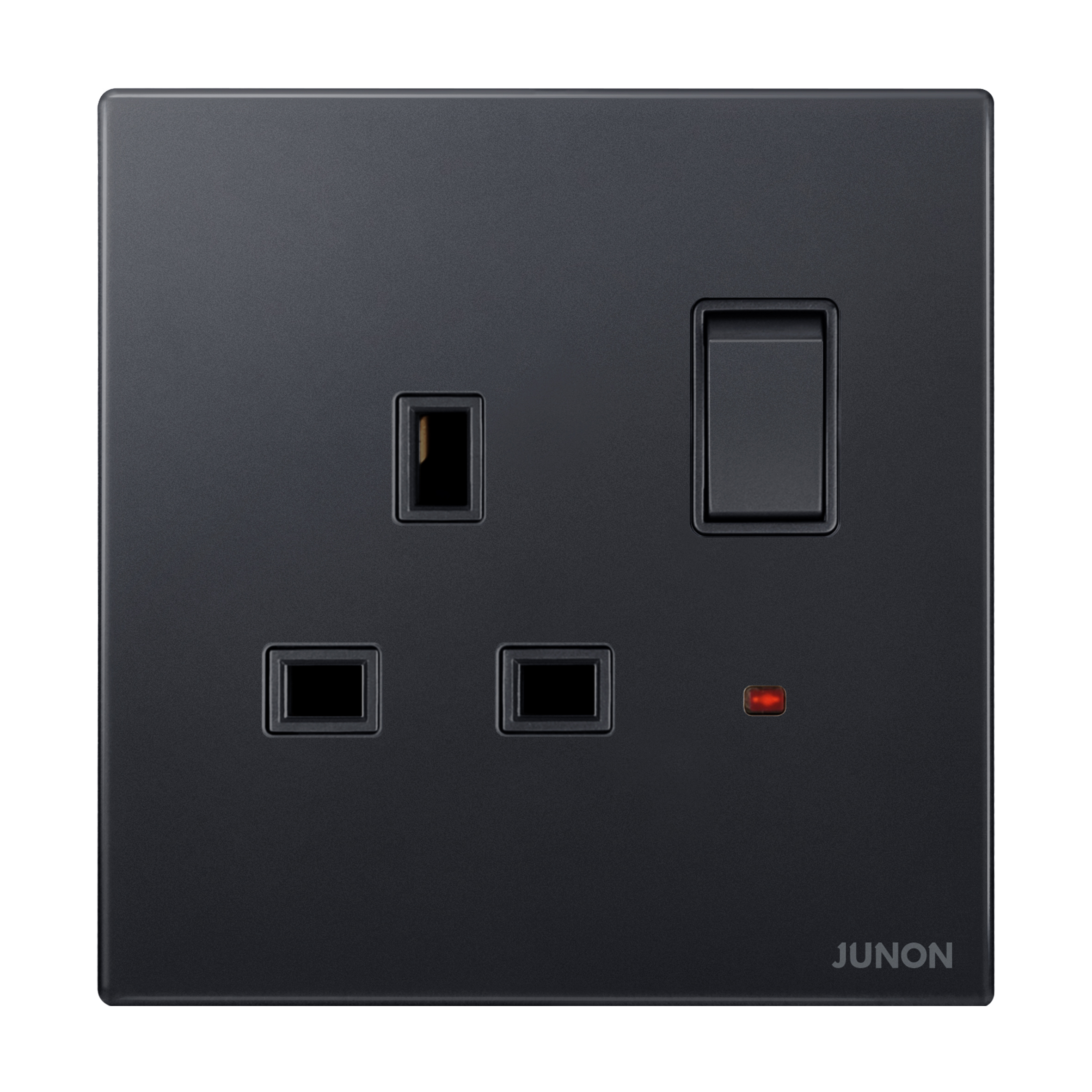
For combined units like the WJ series glass surface 13A BS socket with switch and neon (rated at 13A, 220-250V~), internal component depth is higher than basic lighting toggles. Installing these devices in undersized boxes risks bending phase, neutral, or earth conductors excessively, which leads to terminal insulation fatigue and reduced air creepage distances. Compliance with standards such as GB 16915.1-2014, CE (LVD22-9194), and CB (CN42895) requires adequate volume behind the plate to maintain specified electrical clearances and prevent thermal accumulation.
Commercial building developments, including real-world contracted projects like the Sheraton Astana Hotel in Kazakhstan and Courtyard Tashkent in Uzbekistan, standardize back box depths during early construction phases. Setting 35mm box depth across lighting and power rings accommodates potential retrofits from standard switches to USB sockets or smart automation modules without requiring masonry alterations.
Data/Solution Comparison
| Back Box Depth | Compatible UK Light Switch / Socket Type | Wiring Space Capacity | Primary Application Scenario |
|---|---|---|---|
| 16mm | Standard plastic rocker light switches | Minimal (single 1.5mm² wire ring) | Residential & Domestic Applications (standard surface mounting) |
| 25mm | Flat plate switches, glass surface units, WJ series switched units | Moderate (multiple 1.5mm² or 2.5mm² wires) | Residential & Domestic Applications (flush decorative fittings) |
| 35mm | Dimmer switches, 13A switched sockets with neon, USB switches | Generous (loop-in lighting and power spur connections) | Commercial & Hospitality Applications (hotels, offices, retail spaces) |
| 47mm | Smart automation switches, cooker control units, grid modules | Maximum (heavy-gauge power routing and relay controls) | Public Infrastructure & Civic Projects, complex industrial circuits |
Frequently Asked Questions (FAQ)
Can a 16mm back box be used for a glass surface UK light switch?
A 16mm back box is generally too shallow for a glass surface or flat-plate switch. Modern decorative plates place internal terminals deeper into the wall, requiring a 25mm or 35mm back box to avoid crushing conductor wiring.
What safety risks occur if a back box depth is insufficient?
An overly shallow back box forces cables against the rear casing, increasing mechanical stress on screw terminals. Over time, cable distortion can loosen connections, causing electrical arcing, insulation breakdown, and overheating risks.
What is the standard back box depth for a 13A switched socket with neon?
A 13A BS socket with switch and neon indicator, such as the WJ series operating at 220-250V~, requires a minimum back box depth of 25mm. A 35mm box is recommended when loop-through ring main wiring is present.
Final Conclusion & Recommendations
Determining the standard back box depth for a UK light switch requires evaluating the switch plate profile, internal module thickness, and conductor density. While standard switches operate in 16mm boxes, 25mm to 35mm depths represent the industry standard for decorative glass plates, neon-assisted switches, and power outlets. Ensuring proper back box sizing maintains compliance with international quality standards like ISO9001 and certified safety protocols. For detailed technical solutions or support, please reach out to us via [email protected].
About Us
Guangdong JUNON Songtian Electrical Appliance Co.,Ltd was established in 1983. Operating a factory area of 148,000 square meters with a workforce of 2,000 employees, the company maintains an annual production capacity of 12 million switch and socket units alongside 1.2 million distribution boxes. Certified under ISO9001, ISO14001, ISO45001, CE, CB, and RoHS, JUNON delivers electrical products to over 52 countries worldwide across residential, commercial, and turnkey infrastructure sectors.

Lastest
-
Are there any newly developed UV-resistant plastics for IP65 waterproof distribution box?
2026-09-01 -
What is the maximum current load for this EU wall switch and multi socket?
2026-09-01 -
What is the lead time for a sample of this switch with universal socket?
2026-09-01 -
Can you provide a video tour of your factory where this return switch is made?
2026-09-01 -
How much do you charge for a sample of this multi socket with independent on off switch?
2026-09-01
SUBSCRIBE
INQUIRY